Warli Art
History and Origin
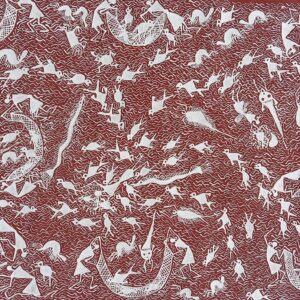
The term Warli is derived from a word that means a small piece of tilled land. The Warli art is inspired by the tribe’s coexistence with nature and the forest. Though the exact origin of the Warli art paintings is debated, it is still considered to be one of the oldest paintings in India to have originated in the 10th century AD or before. The Warli tribes are a group of indigenous people who live in the Thane and Palghar districts of Maharashtra, India.
Subject
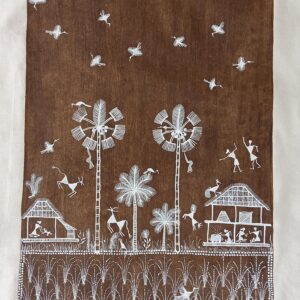
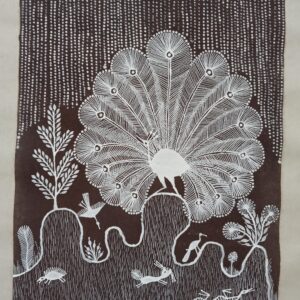
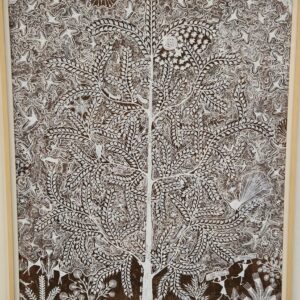
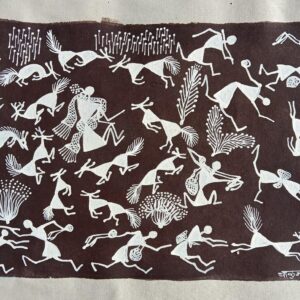
Warli art is known for its depiction of everyday village life, rituals, and nature. The subjects vary from ritual painting, nature, celebration, geometric pattern and social issues. They are often used to represent abstract concepts, such as the cycle of life and the interconnectedness of all things.
Characteristics
Warli paintings use basic shapes like circles, triangles, and squares to create geometric patterns. Each shape has a symbolic meaning, Circles: represent the sun and moon, Triangles- represent mountains and conical trees and Squares -represent sacred space and land.
Warli paintings use symbols to convey meaning. For example, men and women in spiral form and concentric circular designs symbolize the circle of life.
Techniques
The traditional techniques of Warli painting have remained largely unchanged. Tribal communities still adhere to the age-old methods of creating these artworks using natural, locally sourced materials. The walls of tribal huts, made from a mixture of mud and cow dung, serve as the canvas. The paintings are created using white pigment, made by grinding rice into a paste and mixing it with water. The geometric figures are drawn using a simple brush, often made from bamboo sticks chewed at one end to create a fine, bristle-like texture.
Showing all 5 results