Phad
History and Origin
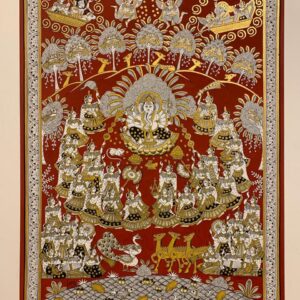
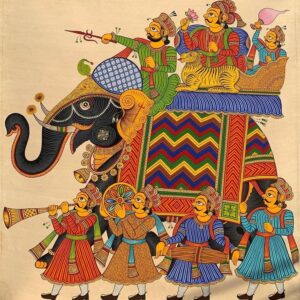
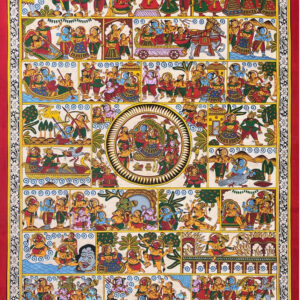
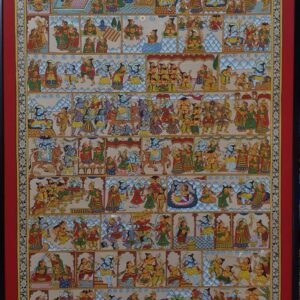
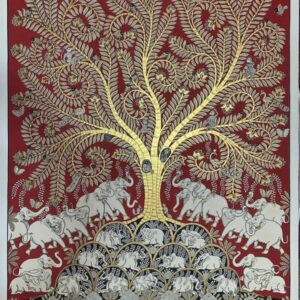
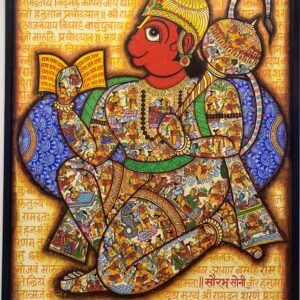
Phad painting is a traditional Indian art form of religious and folk scroll painting. Phad painting is believed to have originated in the 14th century in Shahpura. The word “phad” means “fold” in the regional dialect.
Subject
Phad paintings depict stories of local folk heroes and deities, such as Pabuji, Devnarayan, and Ramdevji.
Characteristics
They are known for their rich colours, intricate details, and engaging narratives. They are traditionally painted on large pieces of cloth or canvas using natural colours.
Techniques
The canvas is a large piece of hand-woven cotton cloth called a phad. The cloth is soaked in water overnight to thicken the threads, then treated with a paste of ground tamarind seeds and gum to stiffen it. The cloth is then stretched, dried in the sun, and polished with a stone to make it smooth and shiny. The colours used in Phad paintings are made from natural pigments derived from minerals, plants, and vegetables. The paint is applied with a medium made of kheriya gond, a local gum. The artist starts with a rough sketch in yellow, then fills in the colours one at a time. The artist adds black to add final details and completes the painting with a black outline. The eye of the main character is created last, as it is believed to bring life to the painting.
Durability
Interestingly, Phad paintings can last for over 100 years due to the natural materials and time-consuming processes used to create them.
Showing all 6 results