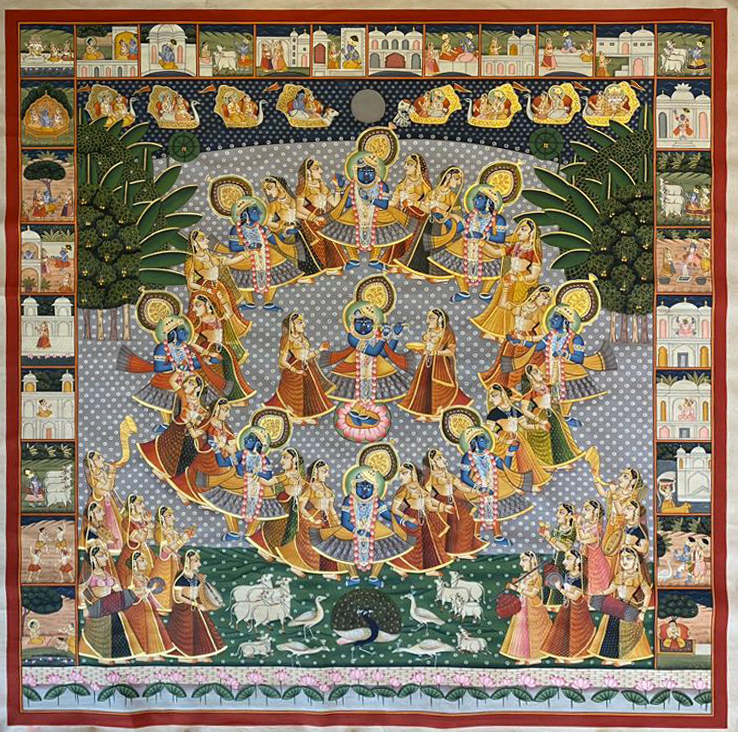

Arts and Projects comes into being from a humble beginning. We take you into a magical and historical storytelling of the Nathdwara temple adorned with enthralling Pichwai’s through narrative paintings. We are thrilled to transport you comprehensively and conscientiously into a heady realm of creativity, quintessential craftsmanship captured on cloth,canvas, paper, Basli, sculptures,wood, rugs, and carpets.

About Pichwai
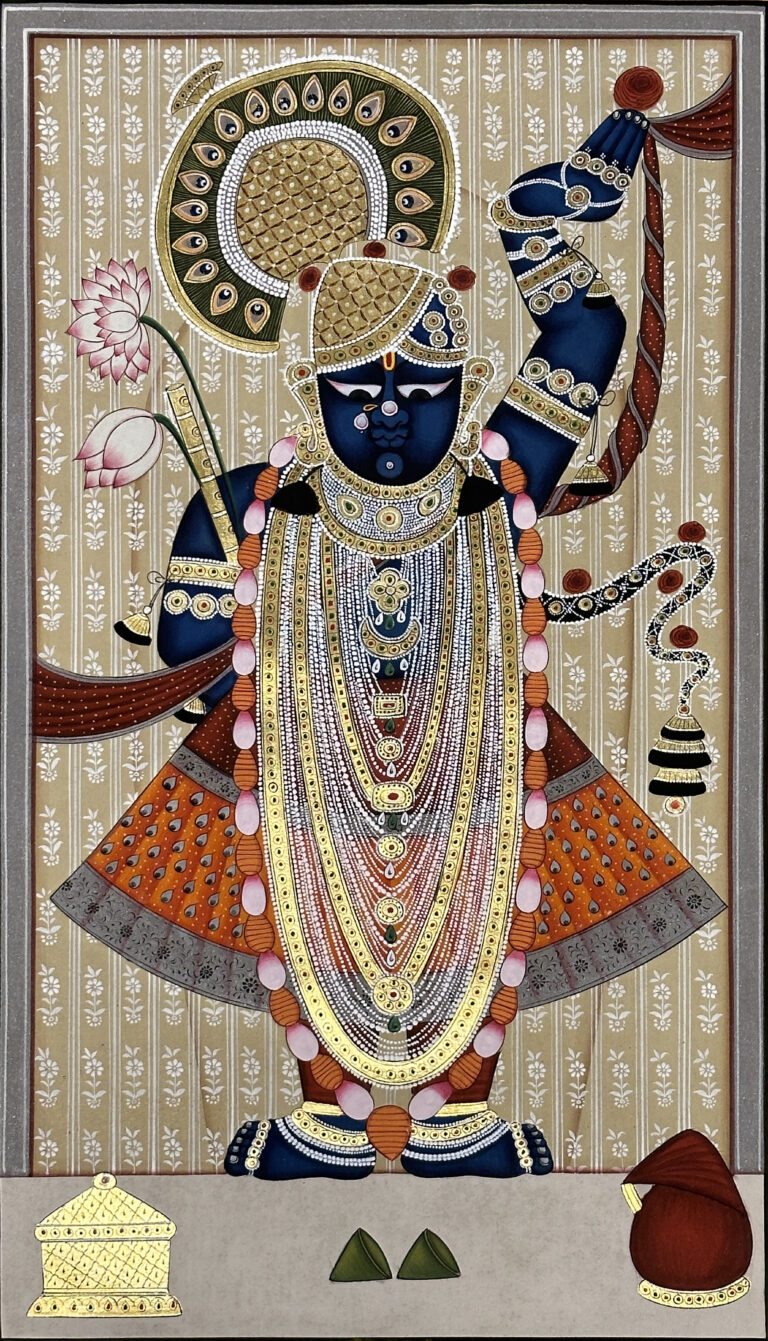
Pichwai , literally meaning ‘that which hangs from the back’ from the Sanskrit words “Pichh” means back and “wais” means hanging, are large devotional painted pictures, usually on cloth, which portray Krishna. They are mainly made to hang in temples of the Pushtimarg devotional tradition, especially the Shreenathji Temple in Nathdwara, Rajasthan, built around 1672. They are hung behind the idol of Shreenathji, a local form of Krishna and the centre of Pushtimarg worship, to depict his leelas.
Pichwais have two main functions within the Pushtimarg Sampradaya. Ones used as backdrops on the inner sanctums in the shrines, they are changed daily and are designed in accordance to the season, festival and rituals of that day.
Other Pichwais are artists documentation of the worship in the faith. Each festival and ritual within the faith is an elaborate affair with a Pichhwai showcasing the adornment, emotions, mood, music, food and dancing that encompasses the worship. With daily worship of Shreenathji having 8 different formal viewings, Pichhwais may often depict the eight different adornments associated with each viewing. Festivals such as Govardhan Puja, Sharad Purnima, Raslila, Holi alongside other prominent festivals in Pushtimarg are depicted with vivid detail on the modes of worship.

Subjects and Festivals

Lord Krishna is often depicted as a 7 years old child as Shreenathji in Pichhwais. Other common subjects found in Pichhwai paintings are Radha, Gopis, Cows, Forest, Peacocks , lotuses, tree of life, shringara, marriage of Shreenathji, mangala and foliage.

Festivals and celebrations such as Sharad Purnima, Raas Leela, Annakoot or Govardhan Puja, Janmashtami, Gopashtami, Nand Mahotsav, Diwali and Holi are frequently depicted in Pichhwais. Each darshan and festival observed by the Pushti Margis has a special mood, a particular emotion that is made manifest through music, poetry, dancing, offerings of sumptuous food and adornment (shringara) in which the Pichhwais play a major role, as part of a matched set of textile coverings including wall coverings, ceiling canopies and coverings for the throne, steps, and other platforms.